
Calk builds suggestions from recorded meals. A suggestion should name the meal, the part to change and the reason. It is a test, not a rule.
Ingredient Change#
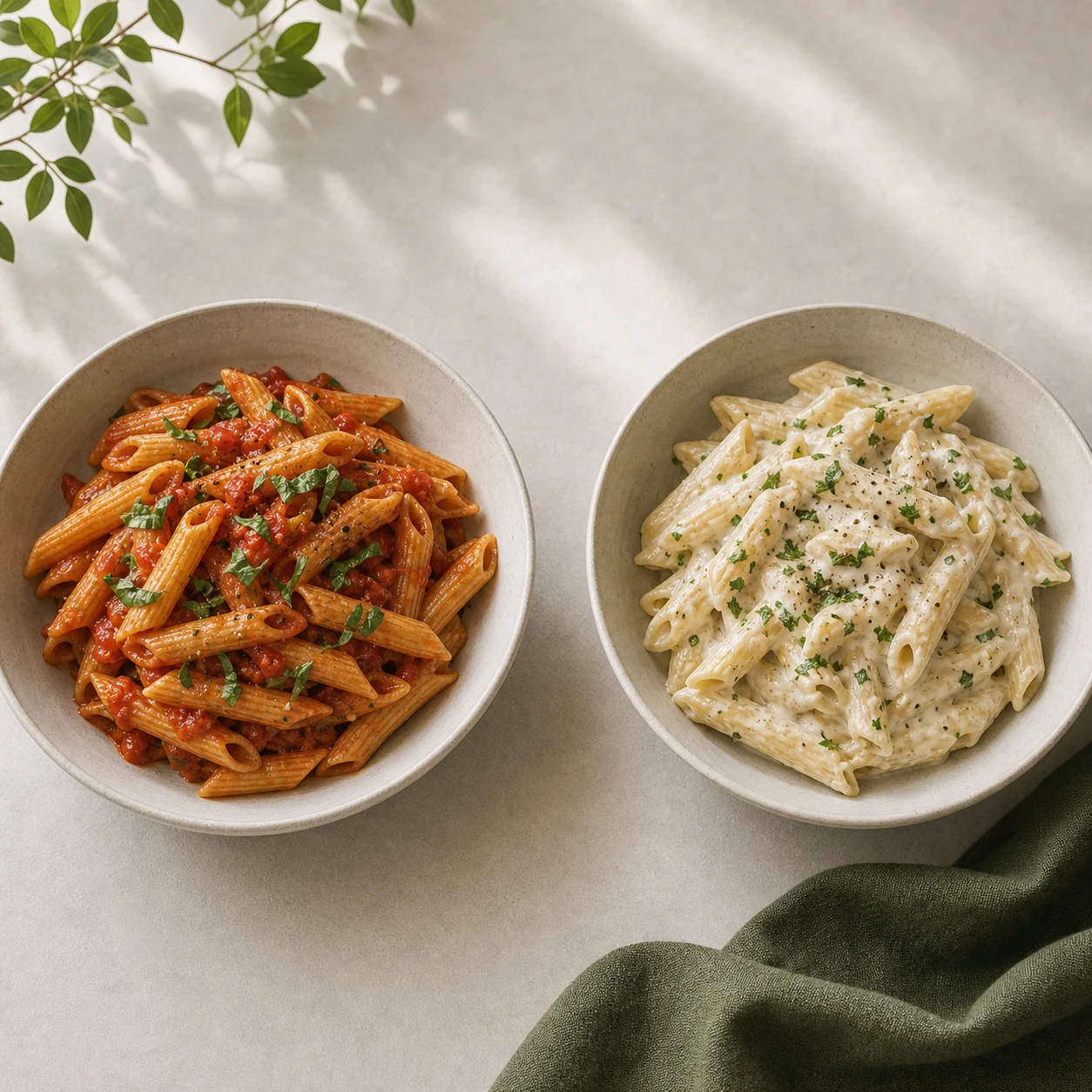
What Calk calculates. Calk looks for an ingredient in a repeated meal that has a realistic alternative with a useful difference—more fiber or protein, less saturated fat, or a lower energy contribution.
What you can do. Change one ingredient while keeping the meal recognizable: mix whole-grain and regular pasta, use yogurt in part of a creamy sauce, or add beans while reducing some meat. Higher-fiber carbohydrate patterns are associated with better long-term health, but that does not make every whole-grain replacement automatically preferable for every person Reynolds 2019.
Cooking Method Change#
What Calk calculates. Calk compares a repeated food with another supported preparation. Frying and pan-cooking can add oil; boiling can remove soluble material; roasting can reduce water. The result depends on the specific food and method Choe 2007.
What you can do. Test the alternative on one dish: bake instead of deep-fry, grill instead of pan-fry, or keep the method and measure the oil. Compare taste, effort and the actual nutrition difference before making it the default.
Portion Change#
What Calk calculates. Calk identifies a food whose amount contributes strongly to the meal or changes substantially between uses. It can suggest a smaller dense component or a larger low-density component.
What you can do. Use a concrete change: one spoon less dressing, one smaller cheese portion, or another serving of vegetables. Portion size and calorie density both affect total energy intake Rolls 2006.
Proportion Change#
What Calk calculates. This keeps the same components but changes their share of the meal—for example, more vegetables and beans, less rice, with the total plate size similar.
What you can do. Adjust the part named in the report and leave the rest in place. The USDA MyPlate image is one familiar general model; Calk’s suggestion comes from the proportions of your own recorded meal U.S. 2024.
Same-Calorie Swap#
What Calk calculates. Calk looks for a starchy food or a sweet that you ate on several days and that carries a noticeable share of the week’s calories. It then picks a food you already eat at the same time of day with more estimated satiety for the same calories: a starchy food in place of a starchy food, fruit in place of a sweet. A croissant, pastry, cake, cookie or sweet bun can also give way to an egg or to plain fresh dairy rich in protein, such as cottage cheese, quark or plain yogurt. The card names both and shows how many grams of each make the same calories.
Estimated satiety follows the satiety index Holt and colleagues measured for 38 common foods, with white bread at 100, and Calk extends it to similar foods with estimates of its own Holt 1995. Calk offers the swap only when the alternative scores at least 1.3 times higher, and only when you are aiming to lose weight or your recent average is above your calorie target.
What you can do. Try it at the meal where you usually eat the first food, in the amount the card shows, and notice how long it keeps you going. If it doesn’t suit you, keep what you had. More foods and plates that fill you up for their calories are in the most filling foods for their calories.