
Two meals with similar calories can differ in portion volume, cooking fat, fiber, protein and micronutrients. Calk keeps those dimensions separate, each with its own number.
Cooking Method#
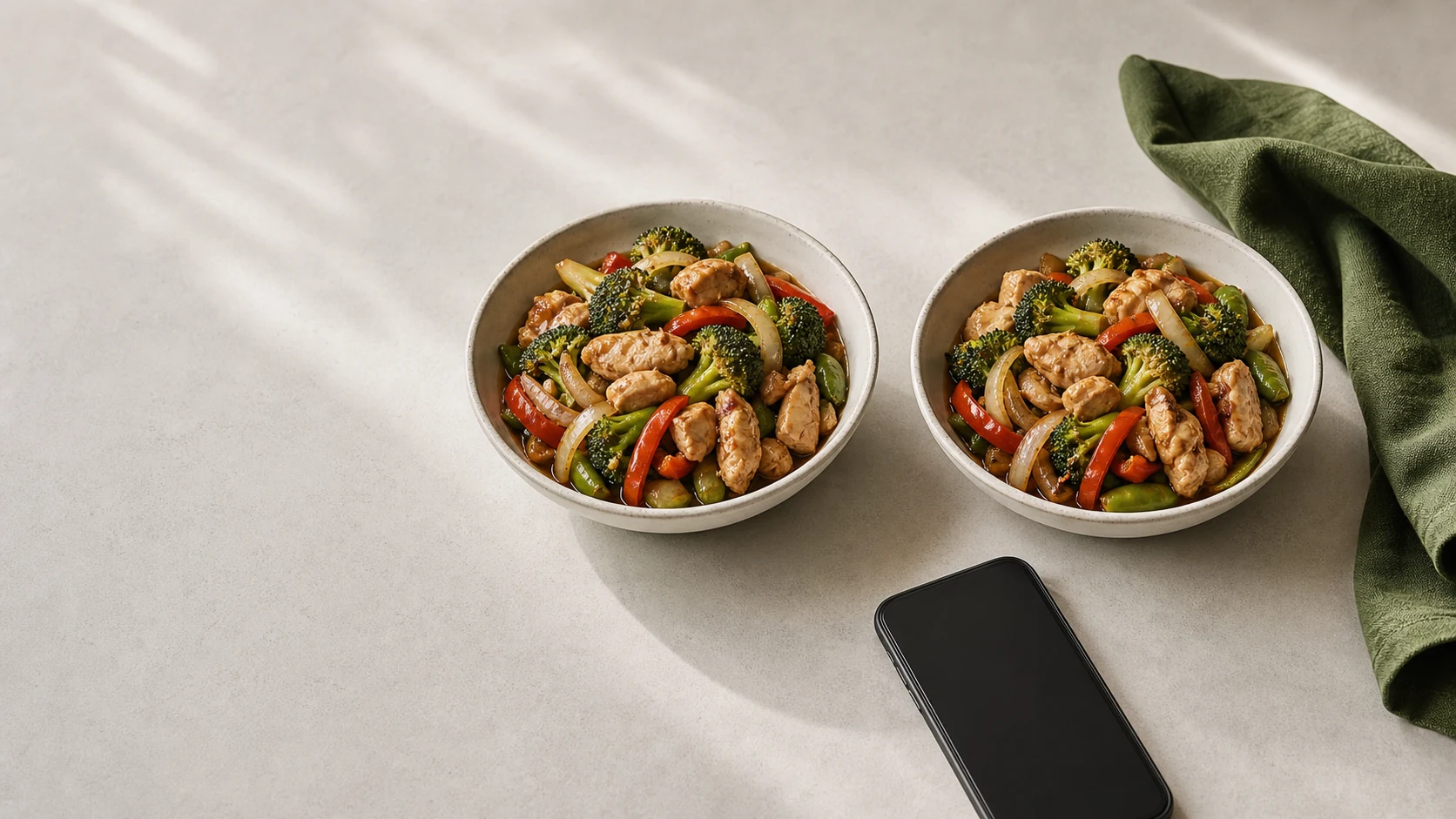
What Calk calculates. Calk groups recorded foods by methods such as raw, boiled, steamed, baked, grilled and fried. Preparation matters because water can be lost and cooking fat can be added or absorbed. The effect depends on the food, method, time and amount of oil; there is no single calorie surcharge that applies to every fried food.
What you can do. Find the method used most often and compare a real alternative for the same meal. Bake one repeated fried dish, measure the oil used for a stir-fry, or keep the method and change the amount of added fat. The detailed mechanism is in how cooking changes calories.
Processing Pattern#
What Calk calculates. Calk estimates the share of recorded food that fits an ultra-processed category. The NOVA definition is based on formulation and industrial purpose, not simply on a long ingredient list or the presence of one additive Monteiro 2019.
In a controlled inpatient trial, participants offered an ultra-processed diet ate about 500 kcal more per day than when offered an unprocessed diet matched for presented calories, macronutrients, sugar, sodium and fiber Hall 2019. The study shows what happened under its test conditions.
What you can do. Start with the product that repeats most often. Compare a less processed option that serves the same purpose, or keep the product and improve the rest of the meal.
Calorie Density#
What Calk calculates. Calorie density is calories per gram of recorded solid food. Foods with more water and fiber often provide a larger volume for the same calorie total. Oil, butter, nuts and many sweets are dense; vegetables, fruit, broth-based soups and some cooked starches are less dense.
Trials of lower-calorie-density eating patterns have found lower energy intake without greater reported hunger Rolls 2017 Ello-Martin 2007.
What you can do. Add volume where it improves a repeated meal: vegetables in pasta, fruit with yogurt, beans in soup, or a less oil-heavy cooking method. Calorie-dense foods can stay; their portion simply affects the meal total faster. The most filling foods for their calories lists everyday foods by calorie density and estimated satiety.
Mediterranean Pattern#
What Calk calculates. Calk checks whether the recorded pattern contains foods commonly used in Mediterranean-style diets: vegetables, fruit, legumes, whole grains, nuts, fish and olive oil, while also considering red and processed meat.
The PREDIMED randomized trial found fewer major cardiovascular events in two Mediterranean-diet groups supplemented with extra-virgin olive oil or nuts than in the comparison group Estruch 2018. The evidence there is for the whole pattern.
What you can do. Add one missing part to a meal already in rotation: beans to a bowl, fish in one regular dinner, nuts with fruit, or olive oil in place of another fat when that swap fits.
Eating Setting#
What Calk calculates. Calk separates settings such as home cooking, restaurant, takeaway and packaged food. Setting can explain changes in portion, cooking fat, sodium and the amount of information available about the meal.
Observational research associates more frequent home cooking with better diet-quality measures, but it does not prove that the location itself caused the difference Wolfson 2015.
What you can do. Compare settings in your own record. If one restaurant lunch repeats, save a consistent estimate. If home meals are easier to understand, add one more home meal where it is practical. The useful result is the difference between your own home and restaurant meals.