
Fat provides 9 kcal per gram, so a small change in oil, dressing or cheese can move a meal’s energy total. Fat type is a separate question: replacing some saturated fat with unsaturated fat has stronger evidence than reducing every kind of fat Sacks 2017 Hooper 2020.
Saturated Fat Pattern#
What Calk calculates. Calk estimates saturated fat as a share of recorded energy and identifies the foods that supply it. Common sources include butter, cream, cheese, fatty meat, coconut fat, palm fat and many packaged products.
WHO recommends no more than 10% of energy from saturated fat and emphasizes replacement with unsaturated fat rather than simple removal WHO 2023.
What you can do. Start with the largest repeated source. Use olive or another unsaturated oil for one regular cooking use, choose a leaner cut sometimes, or change the frequency or portion of a high-saturated-fat product.
Trans Fat Pattern#
What Calk calculates. Calk estimates trans fat when the ingredient data contains it. Industrial trans fats can still appear in products made with partially hydrogenated oils, although regulation has reduced them in many countries.
Trans fat also occurs naturally in beef, lamb and dairy. The WHO limit of under 1% of energy covers trans fat of any origin; what WHO asks to remove from the food supply is the industrially produced kind. Calk stays quiet when most of the trans fat in a diary is the ruminant kind. It still counts toward the limit; the card simply has no useful swap to offer, and telling someone to give up cheese over it is advice the evidence does not carry.
WHO recommends keeping trans fat below 1% of energy and has called for the elimination of industrially produced trans fat from the food supply WHO 2023 Mozaffarian 2006.
What you can do. Check the current product label and ingredient list. A missing trans-fat value in a database is not proof that the amount is zero.
Polyunsaturated Fat#
What Calk calculates. Calk compares recorded polyunsaturated fat with the current reference and shows the main sources. Essential omega-6 and omega-3 fatty acids must come from food EFSA 2010.
What you can do. Add a source that fits the meal: fish, walnuts, seeds or an appropriate plant oil. The relevant amount and source depend on the rest of the diet; more oil is not automatically better simply because it is unsaturated.
Fat Source Pattern#
What Calk calculates. Calk groups the foods behind recorded fat—oils, nuts, seeds, avocado, fish, dairy, meat and packaged products—so the total can be interpreted by source.
What you can do. Compare two foods serving the same role. Replace rather than stack: olive oil in place of butter in one use, nuts in place of a cheese snack, or fish in place of one meat meal. Trials and reviews support replacing saturated fat with polyunsaturated fat for cardiovascular risk reduction Mozaffarian 2010 Sacks 2017.
Omega-3 Balance#
What Calk calculates. Calk estimates omega-3 and omega-6 from recorded ingredients and checks whether omega-3 sources are present. EFSA uses 250 mg/day of EPA plus DHA as an adequate intake for adults, in addition to plant-source alpha-linolenic acid EFSA 2012.
What you can do. For EPA and DHA specifically, add fatty fish, or an algae-based source if you do not eat fish. Ground flax, chia and walnuts supply plant ALA, which is worth having on its own but only a small fraction of which converts to EPA and DHA — the calculation keeps them apart for that reason.
Hidden-Calorie Fats#
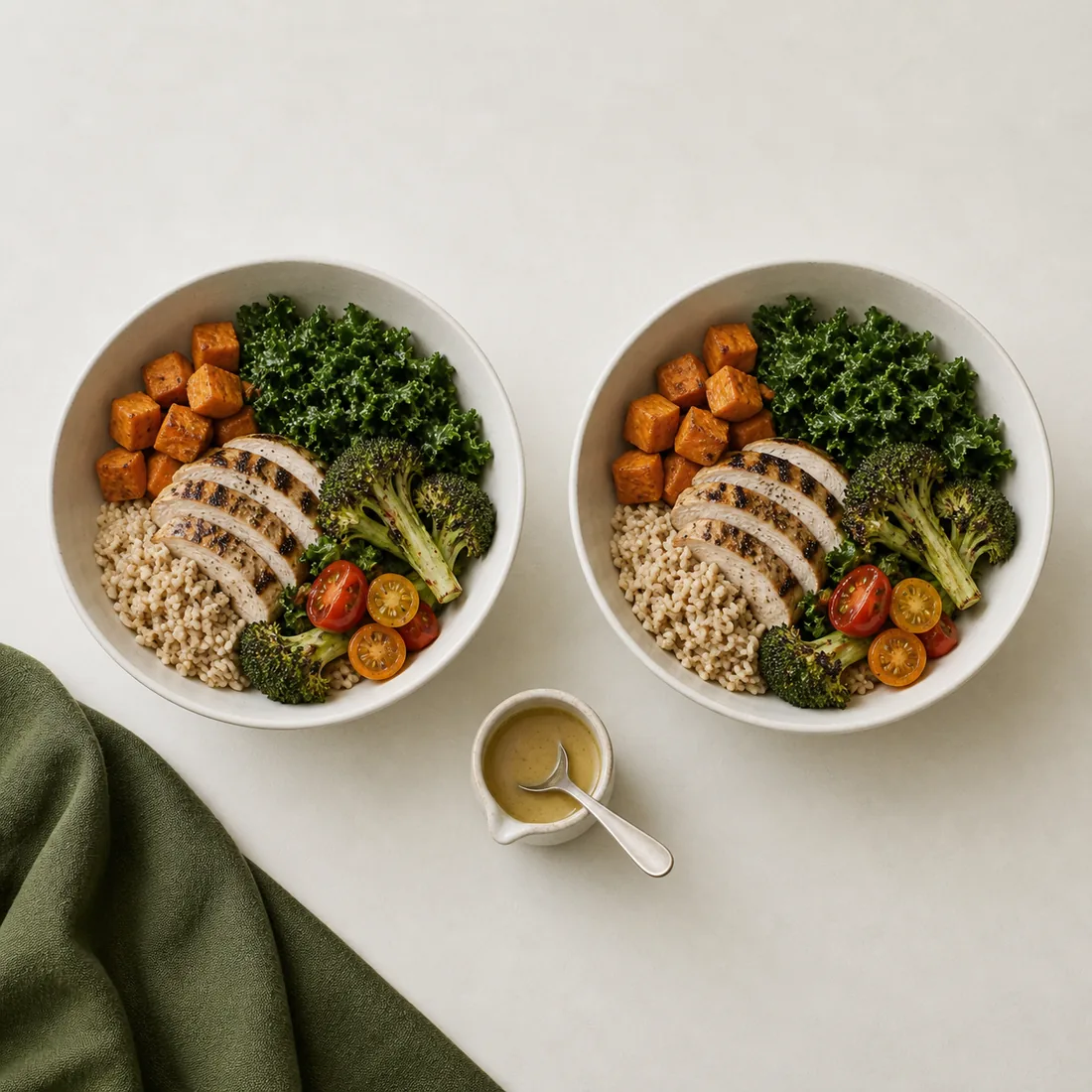
What Calk calculates. Calk ranks cooking oil, dressing, sauce, nut butter, cheese and other dense additions by their contribution to recorded energy. The result is only as accurate as the selected amount.
What you can do. Measure the most frequent poured ingredient once, then set that normal amount in the meal template.