Where ‘30 plants a week’ comes from
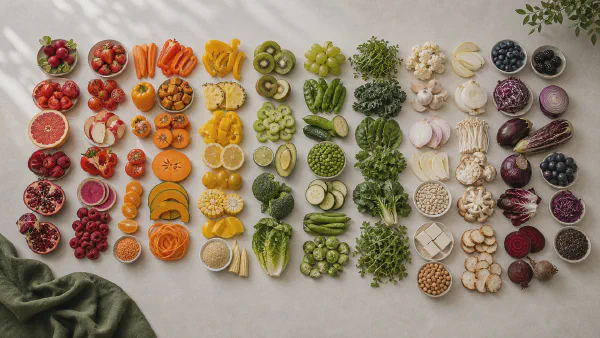
Thirty plants was the top band of a survey question in an observational study, not a universal prescription. The useful idea is to widen a narrow rotation.
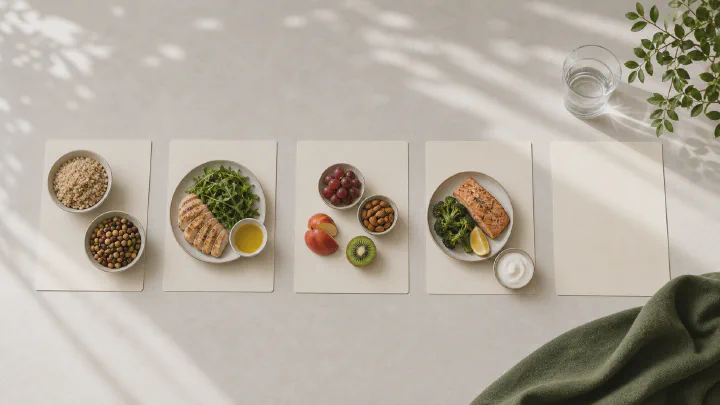
Beyond calories is the slower question: does your usual way of eating give you a solid base over years? One meal cannot answer it. Repeated patterns can.
Energy still matters, and two days with the same total can still differ in protein, fiber, food variety and the kinds of fats, grains and plants behind them. Those details say something across repeated meals, far more than as a score for one lunch.
Log ordinary food and Calk turns it into nutrient coverage and the Variety Map. That makes the practical questions easy to ask: does your diet rest on the same few foods, which nutrients show up rarely, and has a change actually become part of your week?
Log your usual food for a useful stretch, then read the week or the month. Food observations point out what stands out along the way, and the monthly Nutrition Report shows what to add, replace or keep in the dishes you already eat. Add variety where it fits, keep the reliable meals that already work, and leave the rest alone — one unusual day is no reason to redesign a diet. Eating for the long run has to stay repeatable.
These reports describe what you recorded. They do not diagnose a deficiency, predict disease or replace medical advice. Symptoms, supplements and treatment decisions belong with a qualified clinician or dietitian.
| Your question | Start here |
|---|---|
| Does “30 plants a week” have evidence behind it? | Where “30 plants a week” comes from |
| Does eating vegetables or protein first change anything? | What food order changes |
| What can a month of food logs reveal? | How Calk reads a month of food |
| How can I improve eating patterns without chasing perfection? | Eating habits for weight loss |
| How are food and nutrient data checked? | How Calk tests its food data |