
- Calk — the calorie counter you don't have to live in/
- Calories in everyday food/
- How many calories are in a glass of red wine?/
Same-portion calorie comparison
How many calories are in a glass of red wine?
The same pour of wine can differ because both alcohol and residual sugar provide energy. Record the wine style and actual glass size in Calk.

The versions may look almost identical even when their calories differ.
Same 150 g portion, different choices: beer, wine sweetness, cider, spirits, fortified wine.
How sweetness affects calories in wine
In these two examples, the changes are: wine sweetness — dry red wine → sweet red wine.
Lower calorie
116 kcal
150 g
77 kcal per 100 g
higher vs lower calorie
+16%
Higher calorie
135 kcal
150 g
90 kcal per 100 g
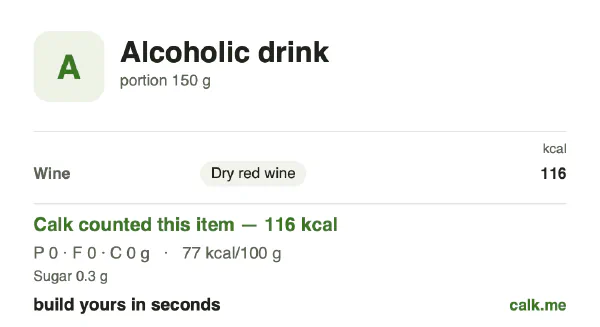
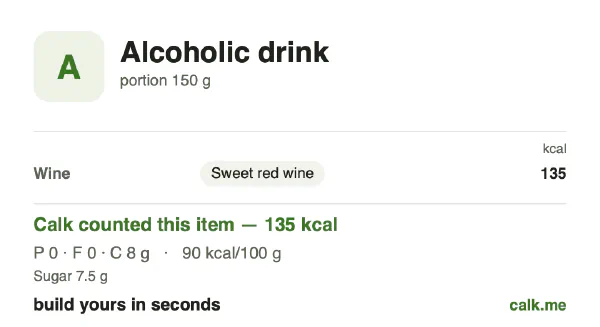
- The sweet red shown contains more than 45 g of residual sugar per liter, making the same-size pour nearly twice as caloric as the dry wine.
- Alcohol contributes 7 kcal per gram in both wines. The residual sugar explains the rest of the difference between these two pours.
Calories in dry, sweet and fortified wine
Calculate calories and macros for dry or sweet red and white wine, fortified wine, beer and alcohol-free alternatives using the pour you had.
Alcoholic drinkSemi-sweet red wineSemi-sweet white wineGlass of red wineAlcohol-free beerDry red wineDry white wineSweet red wineSweet white wineGlass of wineNon-alcoholic beerFortified wine
More calorie comparisons for wine and alcoholic drinks
Learn more
Questions about calories in wine and alcoholic drinks
Does sweet red wine have more calories than dry red wine?
The two versions shown in Calk contain 116 and 135 kcal per 150 g. The same pour of wine can differ because both alcohol and residual sugar provide energy.
Why does the same glass of sweet wine contain more calories than dry wine?
The sweet red shown contains more than 45 g of residual sugar per liter, making the same-size pour nearly twice as caloric as the dry wine. Alcohol contributes 7 kcal per gram in both wines. The residual sugar explains the rest of the difference between these two pours.
How do I calculate calories for my own glass of wine?
Open Alcoholic drink in Calk, choose the wine style and sweetness, then enter the volume you actually poured.
Calculate your own glass of wine in Calk
Calk is available on iPhone, iPad, and Android.