  1. Articles/

The Hidden Calories Guide: Foods That Look the Same but Aren't

Two plates can look identical and still differ by three or four hundred calories. Not because anyone is hiding anything on purpose — because the things that carry the most energy are often the least visible. Fat melts into the meat. Oil sinks into the lettuce. Sugar dissolves into the sauce. Air puffs up the volume. By the time the food reaches the plate, the calorie story has already been written, and most of it happened where you couldn’t see it.

This is why eyeballing a meal — or photographing it — gets you only part of the answer. A camera sees shape and color. It does not see the 15% extra fat in the mince, the second tablespoon of oil that vanished into the pan, or the spoon of sugar already mixed into the glaze. This guide walks through the five places calories hide most, with real comparisons, so you can read a plate more clearly. No food gets banned here. The goal is to see clearly, then decide on purpose.

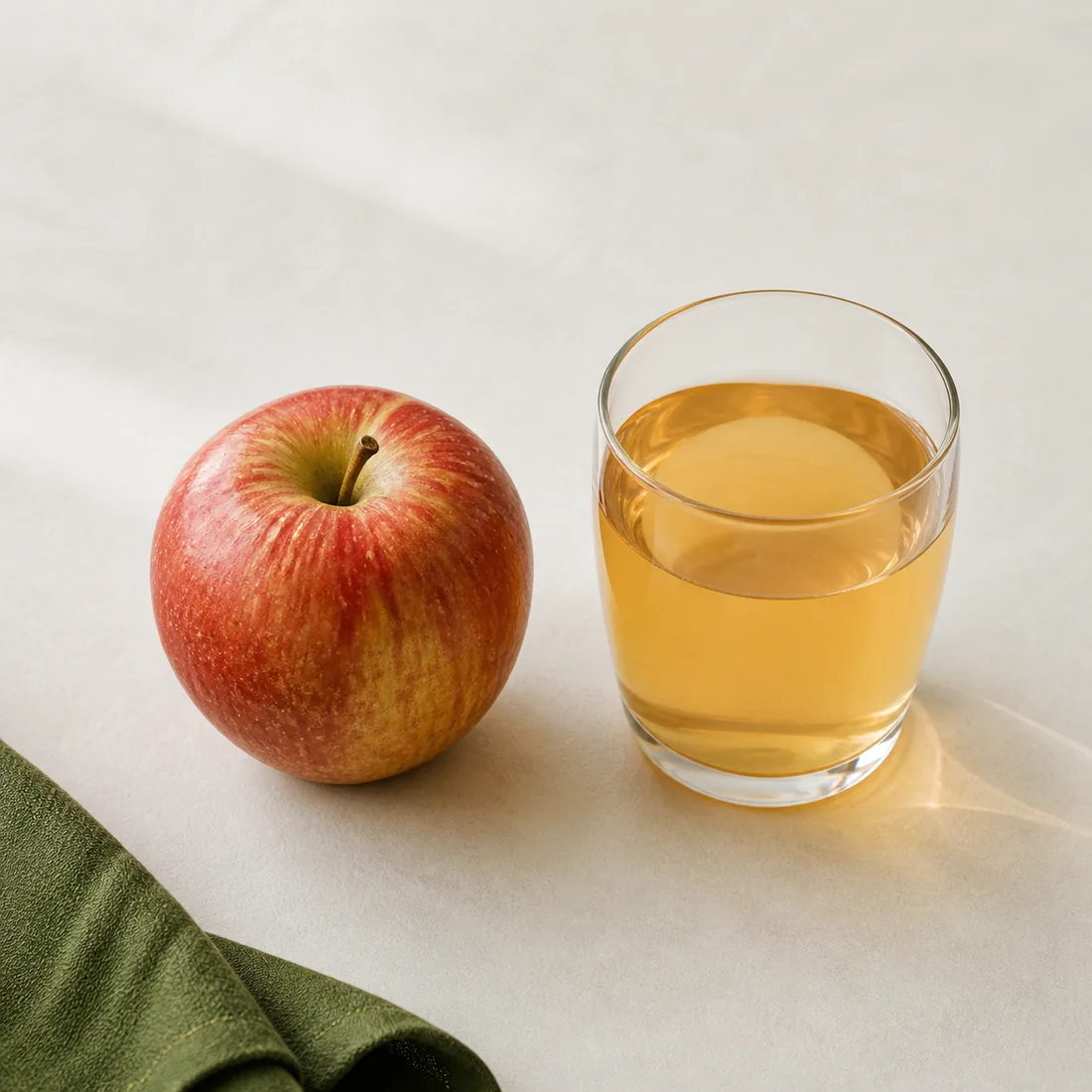
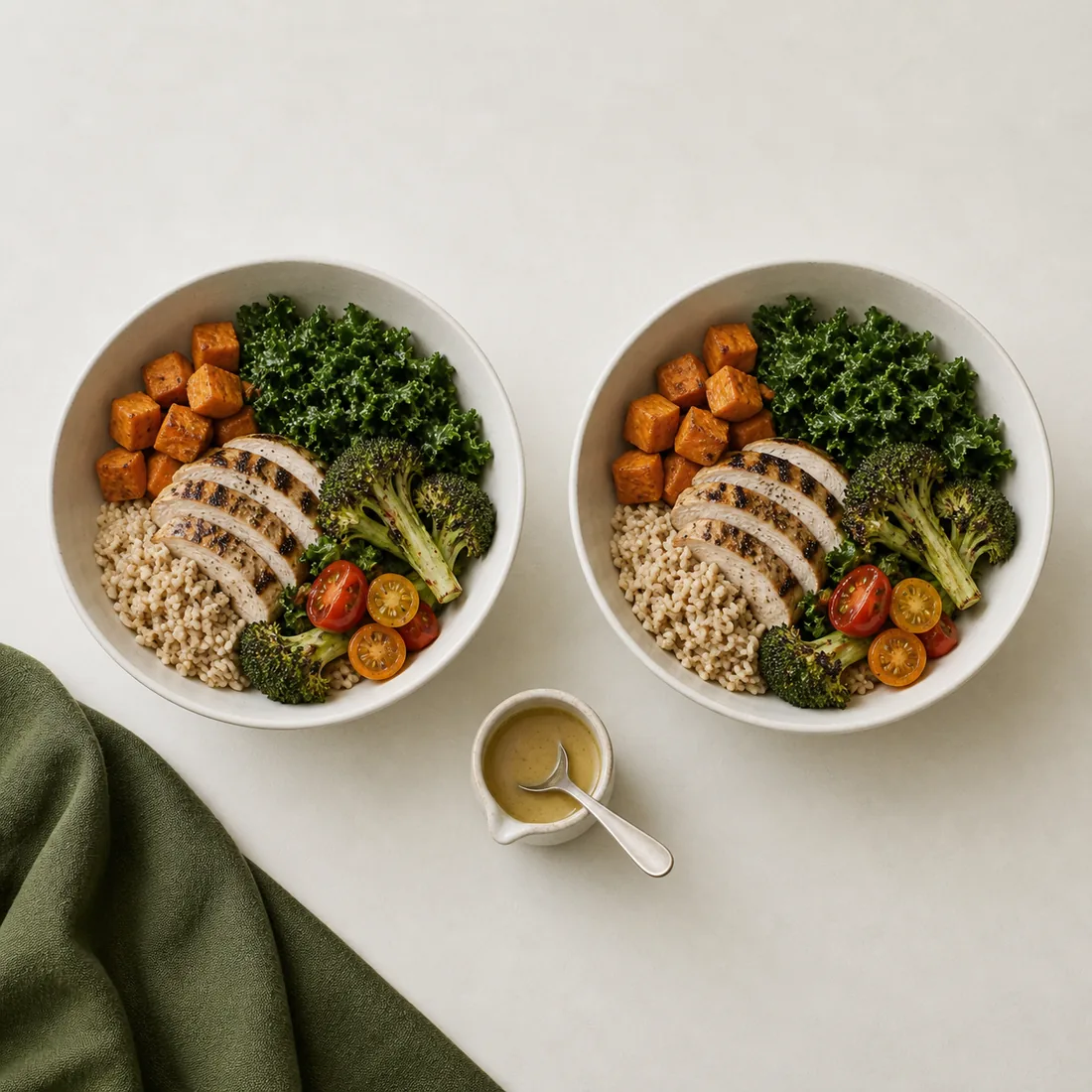
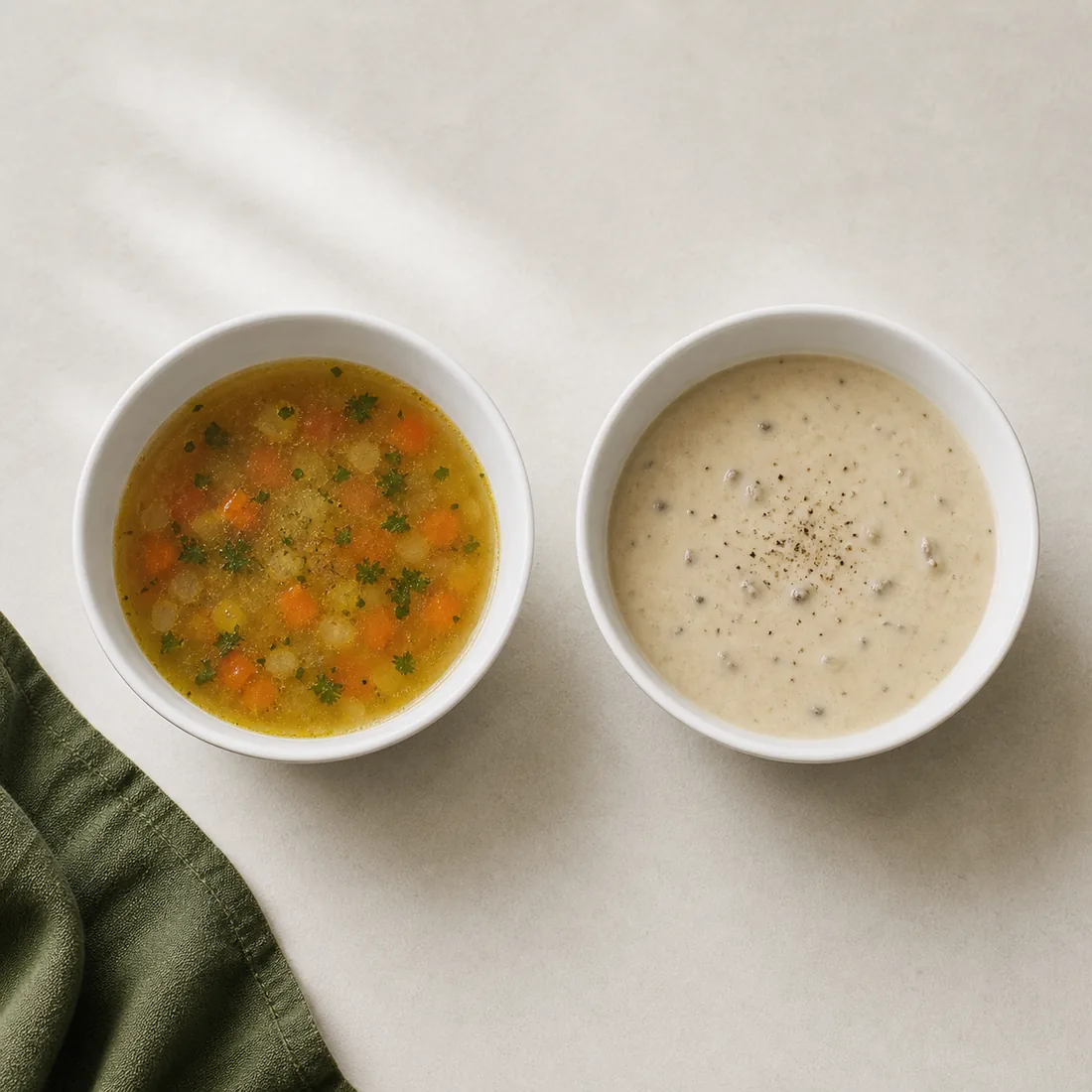
A whole apple beside a glass of apple juice A grain bowl plain versus glossy with dressing Clear broth beside a creamy soup

Same look, very different numbers: an apple vs its juice, a bowl with and without dressing, clear broth vs creamy soup.

Hidden Fat: Why Minced Beef Is a Range, Not a Number
#

Start with the classic. “Ground beef” is not one food — it’s a spectrum defined by fat content, and the label number tells you almost everything.

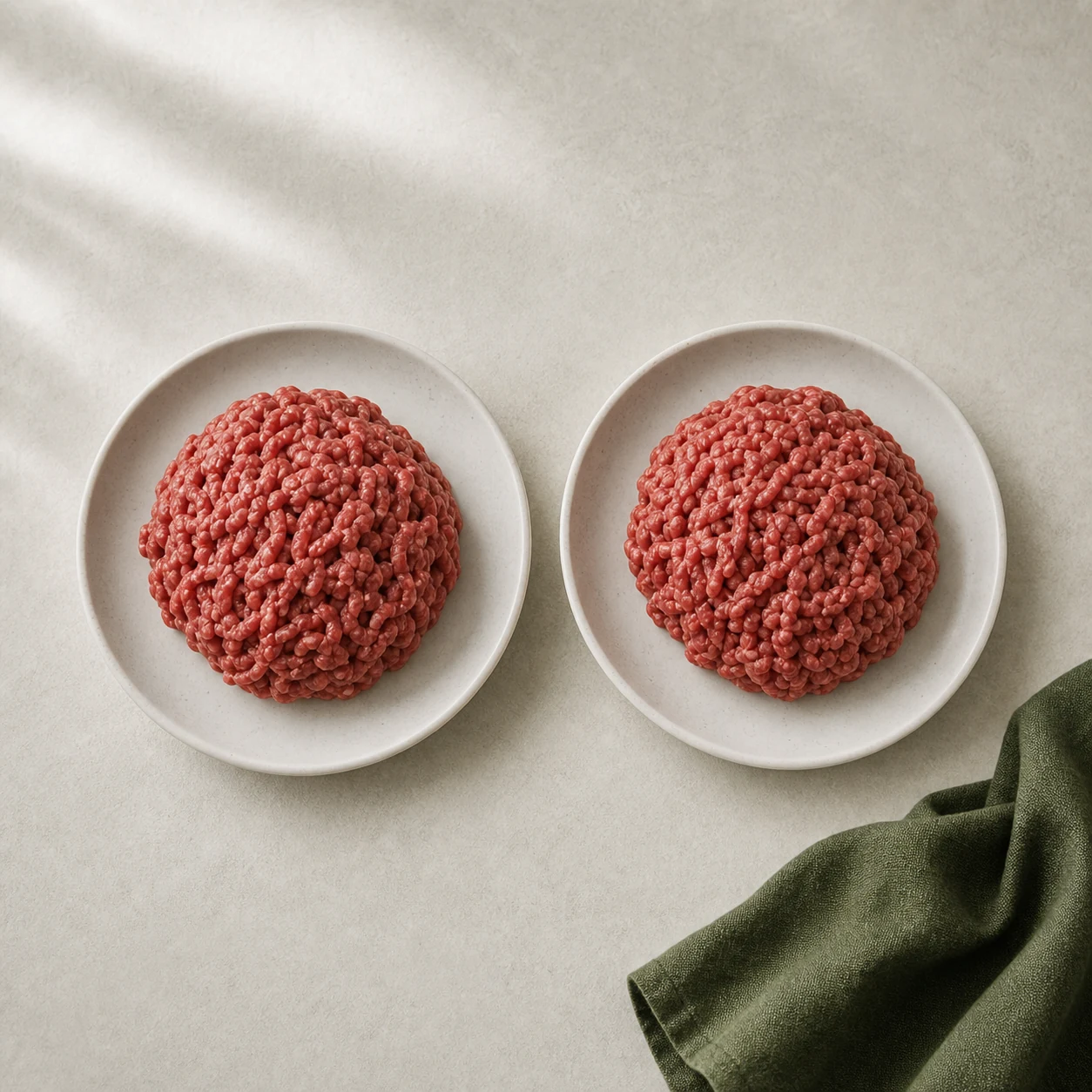
Lean mince at 5% fat runs around 137 kcal per 100 g raw. The fattier 20% blend runs closer to 250 kcal per 100 g. Same red color, same texture in the package, same word on the recipe. But across a 150 g portion that’s the difference between roughly 205 and 375 calories — before you’ve added a bun, cheese, or sauce.

100 g raw minced beef, by fat content

5% lean137kcal20% regular250kcal

Illustrative — based on typical lean vs. regular mince.

Two near-identical bowls of raw minced beef — lean and fatty — that look the same

The trap is that fat is the most calorie-dense thing on the plate — about 9 calories per gram, versus 4 for protein and carbs — and it’s the hardest to see. It renders into the meat, pools invisibly, and gets soaked back up. The same logic runs through every fatty cut and processed meat: a “chicken” sausage and a chicken breast share a name and very little else. If you only change one habit after reading this, let it be noticing the fat percentage when you choose mince. It’s the single biggest lever on the plate, and it’s printed right on the package.

Invisible Oil: The Drizzle That Triples
#

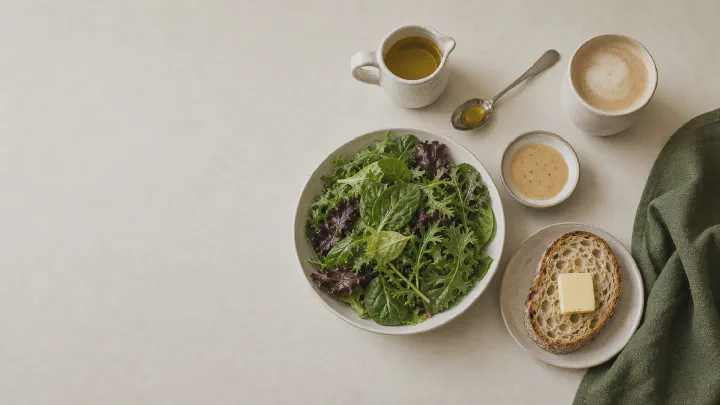
Oil is one of the easiest calorie sources to miss in any kitchen, because it disappears the moment it’s used. A salad tossed in one tablespoon of olive oil and the same salad tossed in three look nearly identical — the leaves just glisten a little more. But oil is pure fat: roughly 120 calories a tablespoon. The difference between a light dressing and a heavy hand is around 240 calories sitting invisibly on your greens.

Cooking hides it even better. Sautéing, pan-frying, and deep-frying all add oil that soaks into the food and stops looking like oil at all. A vegetable stir-fry can swing 200+ calories on the cook’s pour alone. This is exactly why cooking method deserves to be tracked as its own variable, not folded into a single “vegetables” estimate — the grams of vegetable barely move while the calories can double.

The practical fix is rarely “less oil, period.” It’s measuring it once. Pour your usual dressing into a spoon instead of straight from the bottle, just to see the real number. Most people are surprised — and once you’ve seen it, you can keep the flavor you like at a portion you actually chose. We go deeper on this in hidden-calorie fats, the place where small volumes carry outsized energy.

Hidden Sugar: The Calories Dissolved in the Sauce
#

Sugar’s disguise is that it’s already mixed in. You don’t add it at the table, so it doesn’t register as a thing you ate — but it’s there, dissolved into sauces, dressings, and foods marketed as wholesome.

Consider a few everyday culprits:

FoodLooks likeOften contains
Store granolaA healthy breakfast8–12 g sugar per serving, plus oil for the clusters
Flavored yogurtA light snack15–20 g sugar in a single cup
KetchupA condiment~4 g sugar per tablespoon
Teriyaki / BBQ glazeA savory sauce6–10 g sugar per tablespoon

None of these is a villain. The point is that the sweetness is invisible in the plating, so it’s the easiest thing in the meal to undercount. A “healthy” yogurt-and-granola bowl can have more sugar than a dessert while looking like the responsible choice. The most useful habit is to notice added sugar where it lives — in the jar, the glaze, the “lightly sweetened” label — rather than only at the dessert course. Seeing the pattern is the whole job; the swaps (plain yogurt with fruit you add yourself, sauce on the side) follow naturally once you do.

Density and Air: When Same Volume Isn’t Same Mass
#

Here the illusion runs the other way. Two foods can occupy the same space and weigh — and feed you — completely differently, because one is full of air.

Ice cream is the textbook case. Premium ice cream is dense and slow-churned; budget brands are whipped full of air (the industry word is “overrun”). The same scoop can hold noticeably different mass, which is why a “small” of one and a “small” of another aren’t the same dessert. Bread plays the same trick: an airy supermarket loaf and a dense sourdough look like equal slices, but the dense slice packs more flour — and more calories — per centimeter.

A 'cup' of two ice creams, by mass

Whipped budget180gDense premium255g

Illustrative — air content (overrun) changes mass for the same volume.

This is why volume is a poor proxy for calories, and why energy density — calories per gram — is the clearer lens. It also cuts the friendly direction: airy, water-rich, fiber-rich foods let you eat a satisfying volume for fewer calories. Density isn’t good or bad. It’s just a thing worth knowing before you trust the size of a portion to tell you what’s in it.

Fillers and the Composite-Food Problem
#

The last hiding place is structural. Whole foods are simple — a chicken breast is chicken. But processed and composite foods are a built recipe, and the recipe is where the calories drift.

Chicken nuggets are the clean example: under the name “chicken” sits a mix of meat, starch binder, fat, and breading, and the ratio varies wildly between brands. The breading alone — flour plus the oil it absorbs in the fryer — can carry as much energy as the meat it’s wrapping. Sausages, breaded fish, processed patties, and ready-made meatballs all work the same way. The word on the box describes the headline ingredient, not the actual composition.

Composite foodNamed forWhat’s also in there
Chicken nuggetsChickenStarch, fat, breading, absorbed frying oil
SausagePork / chickenAdded fat, rusk, water, salt
Breaded fishFishBatter, breadcrumbs, frying oil
Processed pattyBeefFat, fillers, binders

You don’t need to abandon these foods. You need to treat the name as a label, not a spec sheet — and to recognize that two products sharing a name can sit hundreds of calories apart. This is where building a meal from its actual parts, rather than searching a name and trusting the first hit, pays off.

One More Hidden Variable: Raw vs. Cooked Weight
#

A quick but costly one, because it’s pure arithmetic. Rice triples in weight when it cooks as it absorbs water; chicken loses weight as water cooks off. If you weigh 100 g of dry rice but log it as 100 g of cooked rice, you’ve undercounted by roughly two-thirds. If you weigh cooked chicken but log the raw figure, you’ve overcounted. Same food, same calories really on the plate — but the number you record can be off by a large margin purely from which state you measured. Pick one convention (most databases default to cooked) and stay consistent. This one rewards nothing but attention.

How to Read a Plate More Clearly
#

You don’t need a lab. You need to know where to look. A short field checklist:

  • Fat percentage on meat — the biggest single lever, and it’s printed on the package.
  • Oil and dressing — measure it once with a spoon; the real number is usually a surprise.
  • Sauces and “healthy” foods — assume sugar and oil are mixed in unless told otherwise.
  • Volume vs. mass — air and water inflate size; density tells the real story.
  • Composite foods — read the name as a headline, not a recipe.
  • Raw vs. cooked — pick one state and log it consistently.

Most of hidden calories isn’t willful — it’s structural. The energy lives in the parts you can’t see at a glance: the fat, the oil, the dissolved sugar, the air, the breading. Seeing those parts clearly is most of the work. Once a meal is broken into its pieces, the choices get smaller and calmer — swap the mince percentage, measure the dressing, take the sauce on the side — and you keep eating the food you actually like. For more on the small, dense items that move totals the most, see where your calories come from, and for the swap mindset, smart swaps. If databases themselves are part of your problem, the companion piece on cooking method and calories goes deeper on the same theme from the kitchen side.

Calk’s meal builders are built from these visible parts: you pick the dish, then adjust the actual mince fat, the oil, the sauce, the cooking method — so the hidden calories stop being hidden, and the number reflects the plate you really made.