
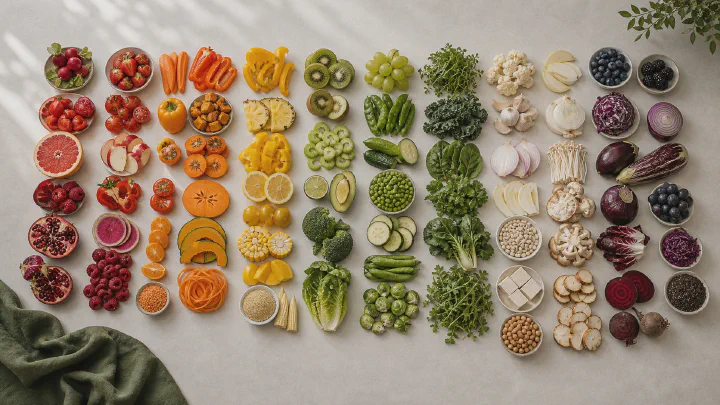
The advice to eat “30 plants a week” came out of the American Gut Project, and it now travels much further than the finding behind it. The project found an association between a wider range of plant foods and a more diverse gut microbiome. Thirty is not a threshold anyone measured.
What the study actually compared#
The American Gut Project collected stool samples and self-reported diet from thousands of citizen scientists. One survey question asked how many different plants a person eats in an average week, and the answers came in bands: fewer than 5, 6 to 10, and so on up to “more than 30.” Thirty is where the questionnaire stopped counting McDonald 2018.
Across those samples, the plant count tracked with microbial diversity while the labels people chose for themselves — vegan, vegetarian, omnivore — did not. Diet types formed clear clusters in the food-frequency answers, and those clusters explained almost nothing about the microbiome. People in the top band also carried more of the bacteria that ferment fiber.
The two small numbers that travel with this advice, 41 people against 44, belong to a chemical analysis of a small subset of the stool samples, not to the microbiome comparison.
Read the result for what it is: an association, in an observational study, drawn from diets people reported themselves. Microbial diversity is a research measure rather than a health outcome, and nobody tested what happens when a person goes from twelve plants a week to thirty.
What survives all of that is the finding the authors argue for: a diet label tells you less than the actual range of plant foods a person eats.
Variety and diet quality are related, but not identical#
A wider diet can cover more nutrients because different foods provide different combinations of fiber, vitamins, minerals, fats and plant compounds. Reviews of dietary-diversity measures generally find associations with nutrient adequacy, but the definition of “diversity” and the strength of the relationship vary by population and method Verger 2021.
Variety is therefore one useful view, not a complete score. Thirty types of sweets made from different plants would not automatically make a balanced diet. A varied pattern still needs enough food, appropriate portions and a sensible mix of food groups.
This is also why Calk keeps variety and nutrient density separate:
- Variety asks: how narrow or broad was the set of foods you recorded?
- Nutrient density asks: which foods supplied a broad amount of useful nutrients relative to their weight or energy?
A cucumber can improve variety and add volume even though it is not nutrient-dense. Sunflower seeds may be nutrient-dense but are not a substitute for the volume and vitamin profile of vegetables. The two views complement each other.
How to widen a narrow rotation#
Do not rebuild the week around a target number. Add variety to meals that already work.
| Repeated meal | One practical addition |
|---|---|
| Oats every morning | Rotate berries, apple, banana, nuts or seeds |
| Rice bowl | Change the bean, vegetable or herb while keeping the same base |
| Sandwich lunch | Add a different vegetable, leaf or soup on the side |
| Pasta | Rotate tomato, mushroom, spinach, peas, lentils or herbs through the sauce |
| Yogurt | Use a small mix of fruit, nuts and seeds instead of relying on one topping |
Frozen vegetables, canned beans and dried herbs are valid food, not lesser versions of variety. The useful change is a new ingredient you will actually eat again.
What the Calk Variety Map shows#
Calk builds the Variety Map from the foods in your recorded meals. Foods you ate appear in color; foods in the same groups that did not appear stay faded. The monthly view comes with the monthly Nutrition Report: you can see whether the month ran on a narrow handful of ingredients, and which nearby group could supply the next addition.
The map does not test your microbiome, and it has no target number. It answers a practical question: what kind of food is almost absent from this month, and what could you add without changing everything else?
For the exact report logic and the separate nutrient-density score, see what the numbers in your Calk report mean.