  1. Articles/

Cooking Method Matters: How Grilled, Fried, and Baked Change Your Calories

You can pick a “healthy” food, log it carefully, and still be off by a third — not because the food was wrong, but because the cooking method was invisible. A chicken breast is one entry in a database. On the plate it might be poached, grilled, oven-roasted, or breaded and deep-fried. Those are not small variations. They can be the difference between a 200-calorie portion and a 380-calorie one, from the exact same piece of meat.

This is one of the most under-counted variables in everyday eating, and it’s easy to fix once you can see it. Cooking method isn’t a moral score — fried isn’t a failure and grilled isn’t a virtue. It’s just a lever, and most weeks are a mix. The job here is to make that lever visible so you can decide when it’s worth pulling.

Why the same ingredient lands at different calories
#

There are really only three things cooking does to the calorie count, and once you know them you can estimate almost any dish.

It adds fat. Frying, sautéing, and roasting in oil all transfer fat into the food. Oil is about 9 calories per gram and roughly 120 calories per tablespoon, so even a “thin film” in the pan is rarely free. Breaded and battered foods are worse: the coating acts like a sponge, pulling oil deep into the food.

It removes water. Grilling, broiling, and high-heat roasting drive off moisture. The food gets lighter and the calories per gram go up, even though the total calories of the protein barely change. This is where raw-vs-cooked weight confusion creeps in.

It changes what’s added. A sauce, a glaze, a marinade, or a breadcrumb crust is a second food riding along with the first. Sometimes the coating carries more calories than the cooking does.

Most of the spread between “the same dish” at two restaurants comes down to these three. If you can name which one is in play, you can usually guess the calorie gap before you ever look it up.

Fried vs grilled vs baked: the oil absorption story
#

Frying is the loudest lever because oil is the densest thing in a normal kitchen. The food doesn’t just cook in oil — it drinks some of it. How much depends on surface area, coating, and temperature.

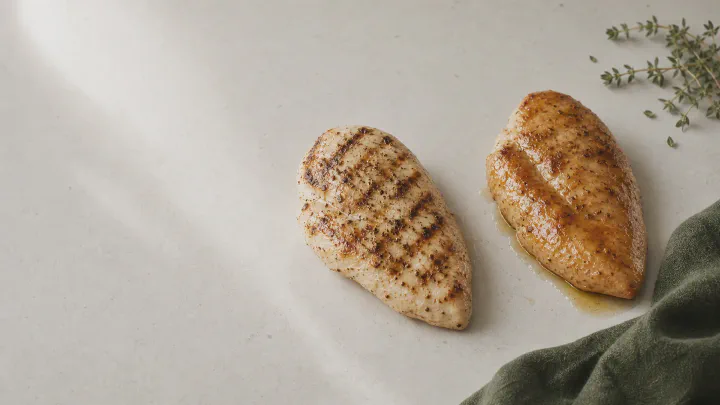
A bare grilled chicken breast and the same breast breaded and deep-fried can differ by well over a hundred calories, and almost all of that gap is absorbed oil plus the breading. The protein underneath is identical.

Same chicken breast, four methods

Poached190kcalGrilled210kcalOven-roasted (light oil)240kcalBreaded & deep-fried380kcal

Illustrative, ~150 g cooked portion. The protein is the same; the gap is mostly oil and coating.

A few patterns that hold up across most foods:

  • Deep-frying with a coating absorbs the most oil, because batter and breadcrumbs are porous. This is why fried fish, schnitzel, nuggets, and tempura sit so much higher than their grilled versions.
  • Shallow-frying and sautéing add real fat too, but less — and the amount depends almost entirely on how much oil hit the pan. One tablespoon versus three is the difference, not the food.
  • Grilling and broiling let fat drip away from fatty cuts, which can actually lower calories for things like sausages or marbled steak, while drying the food out and concentrating calories per gram.
  • Baking and oven-roasting land in the middle. Roasting in a heavy pour of oil is closer to frying; roasting on a rack with a light spray is closer to grilling.
  • Boiling, steaming, and poaching add no fat at all. They’re the floor of the range, which is why poached chicken and steamed fish are the leanest versions of themselves.

The takeaway isn’t “always grill.” It’s that the cooking method, not the ingredient, is usually the bigger lever. If you want to read more about why fat is the highest-leverage macro on the plate, the fats and oils reference goes deeper, including the hidden calorie fats that hide in cooking oil and dressings.

Water loss in grilling, and the raw-vs-cooked trap
#

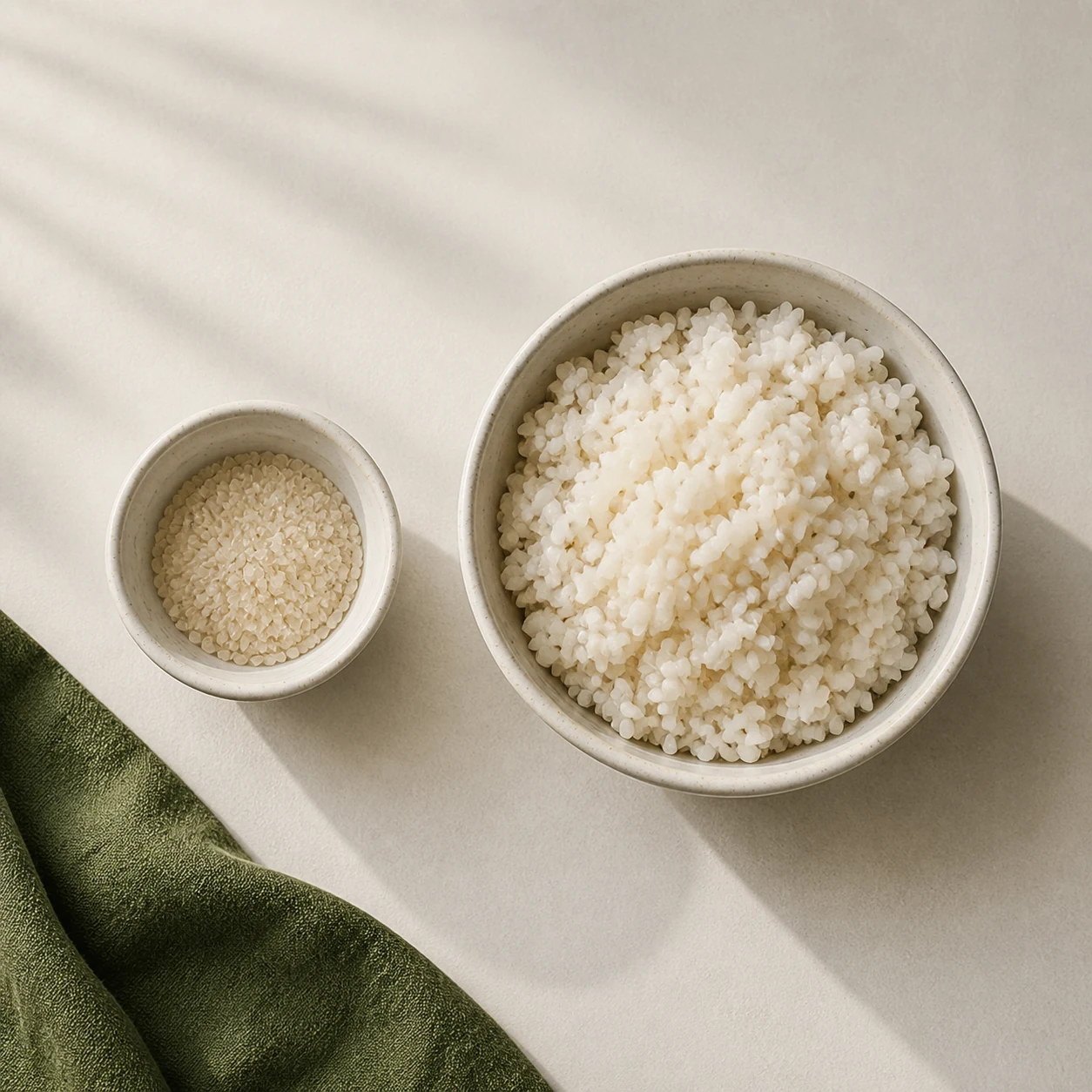
Dry uncooked rice beside the same rice cooked — it roughly triples in weight

Grilling and roasting feel like the “clean” methods, and for added fat they often are. But they introduce a different counting problem: weight loss.

Meat can lose roughly 20–25% of its weight to water during cooking. So 150 g of raw chicken becomes about 115 g cooked. If you weigh the cooked piece but log it against a raw database entry — or the reverse — you can be off by 20% or more without touching the recipe. This is one of the easiest sources of error to miss in food logging, and it has nothing to do with how careful you are.

A simple rule of thumb: decide whether your number is “raw weight” or “cooked weight” and stay consistent. Cooked entries already account for the water that left. Raw entries assume you’ll cook it yourself. Mixing the two is where the math drifts. Rice and pasta have the opposite version of this — they gain water and roughly triple in cooked weight — so “a cup of rice” is a very different number depending on which side of the pot you’re measuring. If portion sizing is the thing tripping you up, the portion swing section is worth a look.

Breading vs sauce: the second food on the plate
#

Once the protein is cooked, the next big mover is whatever is added to it — and this is often a bigger swing than the cooking method itself.

Breading and batter are essentially a layer of refined carbohydrate that then absorbs oil during frying. You’re paying twice: once for the flour, once for the oil it soaks up. A plain grilled fillet and a breaded fried one can differ as much from the coating as from the cooking.

Sauces and dressings are the other half of the story. A grilled chicken salad is genuinely light — until the dressing arrives. A few tablespoons of a creamy or oil-based dressing can carry more calories than the chicken. The same is true for glazes, aioli, cream sauces, and “just a drizzle” of olive oil that turns out to be three tablespoons.

Grilled salad: the dressing is the meal

Salad + chicken260kcal+ creamy dressing500kcal

Illustrative. The leaves and chicken barely changed; the dressing nearly doubled the plate.

This is the part that surprises people most, because it’s not on the “main” food at all. The cooking can be flawless and the add-ons can nearly double the meal. If you want the full picture of where these surprises hide, the hidden calories guide covers oils, sauces, and density illusions in one place.

A quick reference: cooking method, roughly ranked
#

For a typical protein portion, here’s the general order from leanest to richest. Exact numbers depend on the cut, the coating, and how much oil hits the pan — but the direction is reliable.

MethodWhat it does to caloriesWhy
Steam / poach / boilLowestNo added fat at all
Grill / broilLow–mediumNo added fat; fat can drip off; water loss concentrates per-gram calories
Bake / roast (light oil)MediumSome added fat, depending on the pour
Sauté / shallow-fryMedium–highReal oil absorption, set by how much you use
Roast in heavy oilHighCloser to frying than to baking
Bread & deep-fryHighestCoating soaks up oil; you pay for flour and fat

You don’t need to memorize calorie tables. You need to recognize which of the three levers — added fat, water loss, or the second food — is in play for the meal in front of you. That alone gets most people from “wildly off” to “close enough to act on.” For the bigger picture of how cooking fits alongside processing and food density, the food quality and cooking reference, especially the cooking method section, ties it together.

What this means for everyday choices
#

None of this argues for eating bland food. It argues for knowing the cost of a method so the trade is a choice, not a surprise. A few simple, low-effort moves:

  • When you want the lighter version, the move is usually about the oil and the coating, not the ingredient. Oven-roast instead of deep-fry; ask for the dressing on the side; choose a tomato-based sauce over a cream one.
  • When you grill, keep your weighing consistent — cooked-against-cooked, raw-against-raw — and the raw-vs-cooked trap mostly disappears.
  • Treat sauces and breading as separate decisions from the protein. They often change the calories more, and they’re easier to adjust without changing the meal you actually wanted.

The reason cooking method gets missed isn’t carelessness — it’s that most tools collapse a dish into one database entry and assume a method. A photo can’t see the oil that soaked into the breading; a generic search can’t tell poached from fried. So the variable that matters most just disappears.

That’s the gap Calk is built to close. When you build a meal in Calk, the cooking method is a first-class choice you can change — grilled, fried, baked — and the calories move with it, the same way they do on your plate. If you’ve ever logged a “healthy” meal and felt the number didn’t match the result, this is usually why, and it’s the kind of thing to check once.