
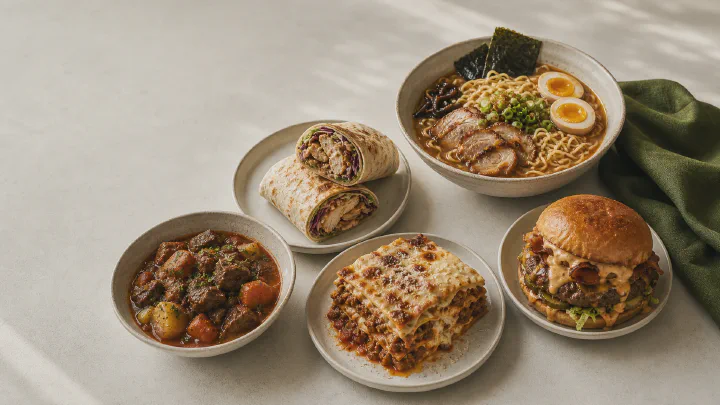
You can count calories without weighing food by estimating portions consistently and naming the parts that change the total. A palm of protein, a fist of starch and a thumb of fat give you repeatable reference points. Cooking oil, sauce, cooking method and the overall portion deserve more attention because small changes there can affect the estimate quickly.
Hand-portion method#
Hand portions turn a meal into a few consistent reference points instead of a gram-by-gram accounting task:
| Meal part | Quick visual estimate | What it helps with |
|---|---|---|
| Protein | 1 palm | Chicken, fish, tofu, eggs, lean meat |
| Starch / carbs | 1 fist | Rice, pasta, potatoes, bread, grains |
| Fat | 1 thumb | Oil, butter, mayo, nut butter, dressing |
| Produce | 1-2 fists | Vegetables, fruit, salad volume |
For a simple plate, that is already useful. Chicken, rice, vegetables and a little oil can be estimated quickly. You do not need to know whether the rice was exactly 142 g to notice that extra oil matters far more than extra lettuce.
Your palm and fist help you judge portion size, but they do not represent one fixed weight for every person and food. Use them as familiar reference points.
Where a visual estimate works well#
No-scale calorie counting is simplest when you know what the meal contains.
A grilled chicken bowl is readable: protein, grain, vegetables, sauce. A breakfast plate is readable: eggs, bread, avocado, fruit. A homemade soup can be readable if you know what went into the pot.
In those meals, focus on the parts that actually change the number rather than perfect grams. Did the sauce double? Was the chicken fried instead of grilled? Did the rice portion become two fists instead of one? Those questions capture most of the useful information.
A database entry that says 587 calories looks exact, but if it assumed a different sauce and a different cooking method, the exact-looking number is not yours. A rough estimate built from your actual parts may be more useful than a precise entry built from someone else’s meal.
Where no-scale estimates drift#
Eyeballing gets weaker in exactly the places calories hide:
- Oils and dressings. A tablespoon and three tablespoons can look nearly the same once tossed through food.
- Sauces. Mayo, cream, coconut milk, pesto, and sweet glazes can move a dish more than the main ingredient.
- Sides you cannot count. Rice, pasta, cereal, and mashed foods are hard to judge because there is no unit to count.
- Restaurant food. You cannot see what happened in the pan.
- Packaged and composite food. Nuggets, patties, pastries, and ready meals are recipes, not single ingredients.
For the full tour of the parts the eye misses, read the hidden calories guide.
Use a meal template for mixed food#
Choose a template that fits your meal, then set the options available for it: ingredients, cooking method, sauce, additions and portion size.
In a Calk template, you can change just what is different today, such as the sauce or cooking method. Your other choices stay in place.
The mechanics are laid out in what a meal template is. It keeps the speed of a practical estimate without asking you to choose among database rows that describe different recipes.
A practical no-weighing protocol#
1. Start with a normal plate. Do not change the meal because you are logging it, or the diary will describe one week of good behavior instead of your ordinary life.
2. Name the anchors. Protein, starch, fat, produce, sauce. If you can name those five, you can usually explain the meal.
3. Use hand portions as reference points. Palm, fist, thumb. Keep the language consistent from meal to meal.
4. Check fats and sauces. They are easy to underestimate once mixed into a dish. If you measure only one thing once, measure your usual oil or dressing pour so your eye has a reference. See Calk’s hidden-calorie fats insight for the foods that contribute most.
5. Save familiar meals. Save your version to favorites with the ♥ button and add it to the food tab. Next time, open it, update only what changed and tap Eat.
6. See what Calk found. Food observations highlight useful points from recent days, while the monthly Nutrition Report shows recurring meals and suggests changes. Try a suggestion that suits you and check the result against your weight trend. Once the changes are familiar habits and the trend is on track, finish daily food logging and keep weighing yourself. Calk will let you know when it is worth returning to the diary.
When to be more careful#
If food monitoring is part of medical treatment or recovery from under-eating, agree on the method and level of precision with your clinician.
For everyday maintenance or a first learning month, a consistent no-scale estimate can show whether the sauce, cooking method or portion changed a repeated meal.
For Calk’s published test results, read how accurate Calk is. For the maintenance loop, read how to maintain weight without tracking every day.
Calk is available on iPhone, iPad, and Android.