Not less food — different food: more filling, more varied. A month to find what to change. Once all the changes are habits, daily food logging is no longer needed. Then follow your weight trend.
Food log 1 month or moreFood check 1 week
A year with Calk: log until the changes become habits, then follow your weight and return for a short food check when needed.
Calk is available on iPhone, iPad, and Android.
Nutrition Report
What to change in the food you already eat
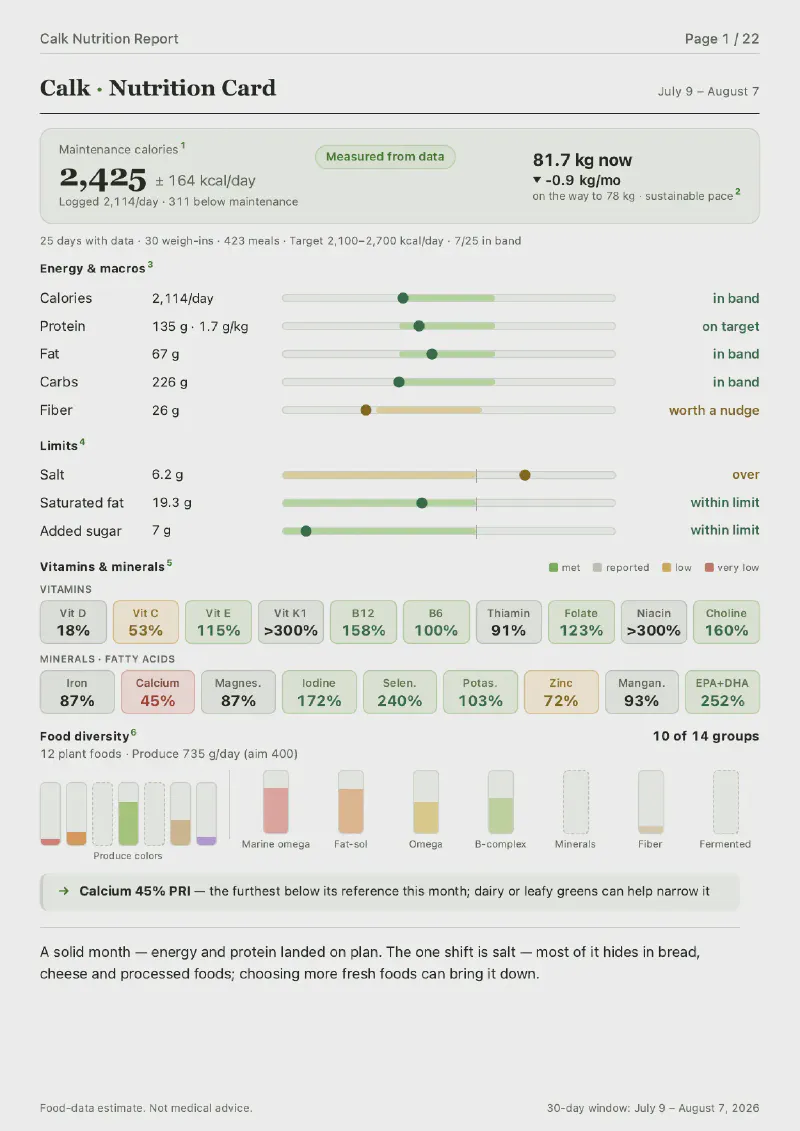
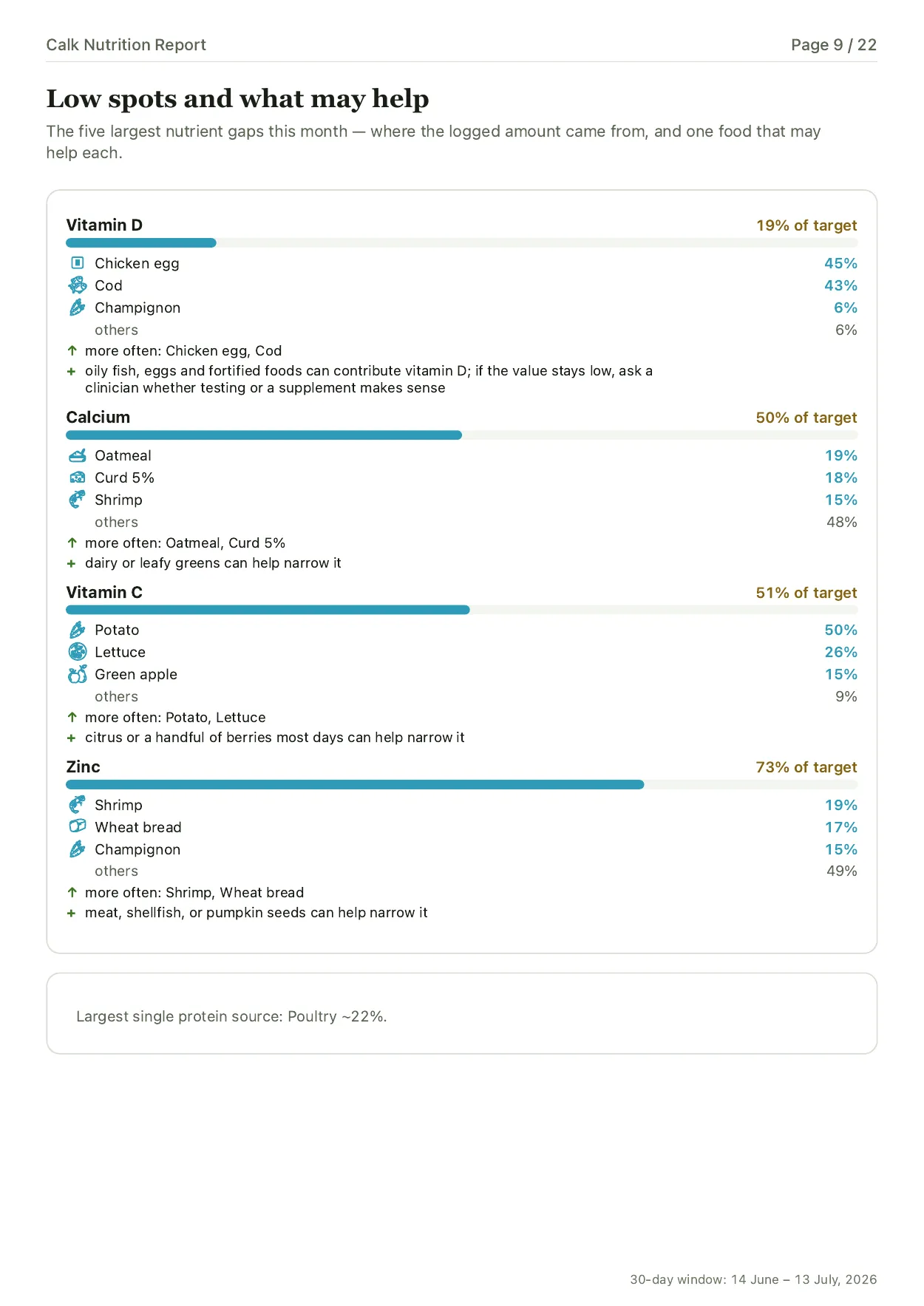
The Nutrition Report shows what your usual diet is missing and which meals are worth changing.
Calk reportLow fiber
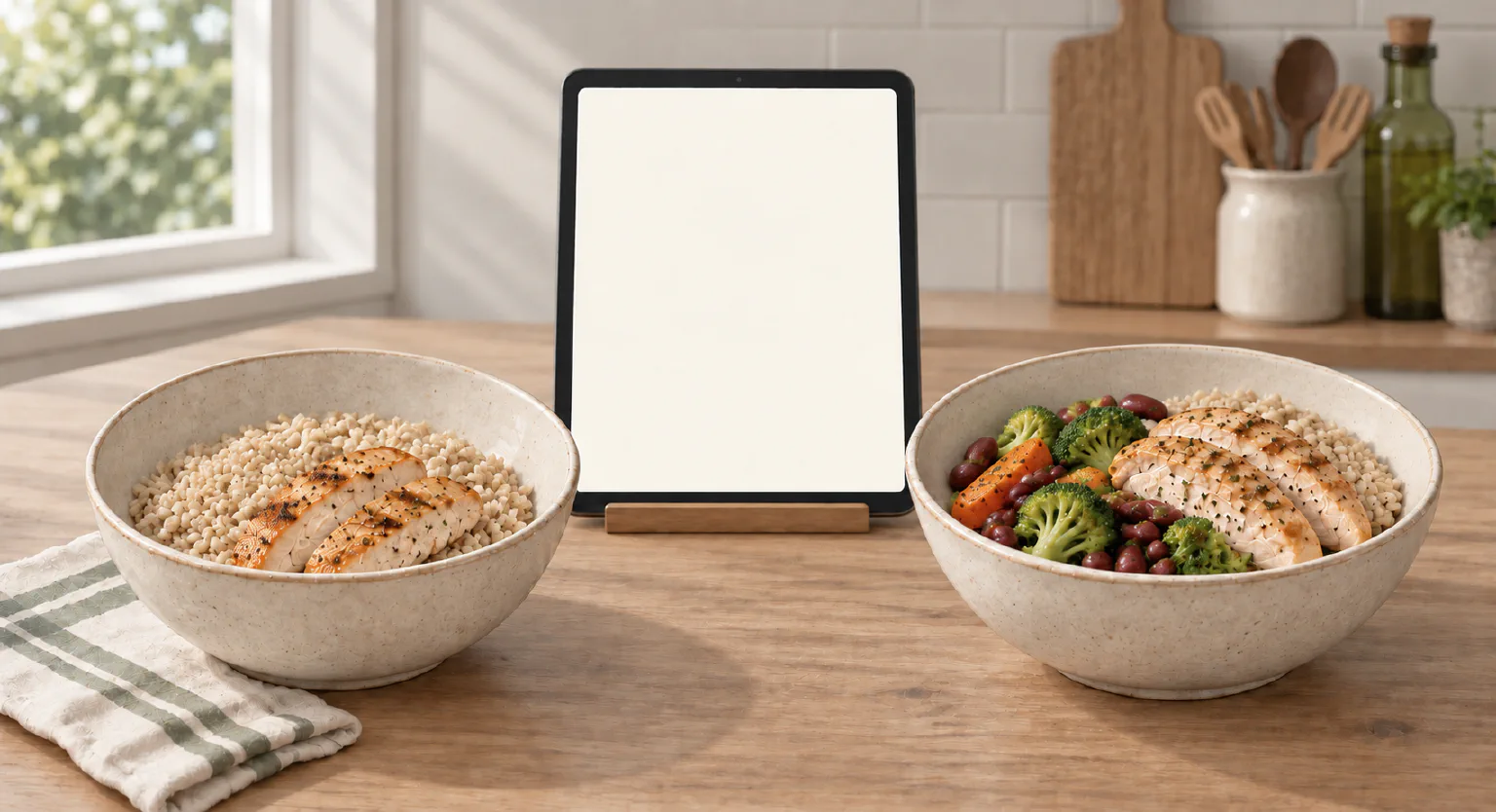
Familiar mealWith vegetables & beans
Low fiber
Replace some rice with beans and vegetablesFiber ↑ · Protein ↑
EnlargeCalorie density and estimated satiety Calorie density is kcal per 100 g. Estimated satiety follows the satiety index Holt and colleagues measured, with white bread at 100, plus Calk's estimates for similar foods. Lower calorie density and higher estimated satiety is the better direction.See the full example report →
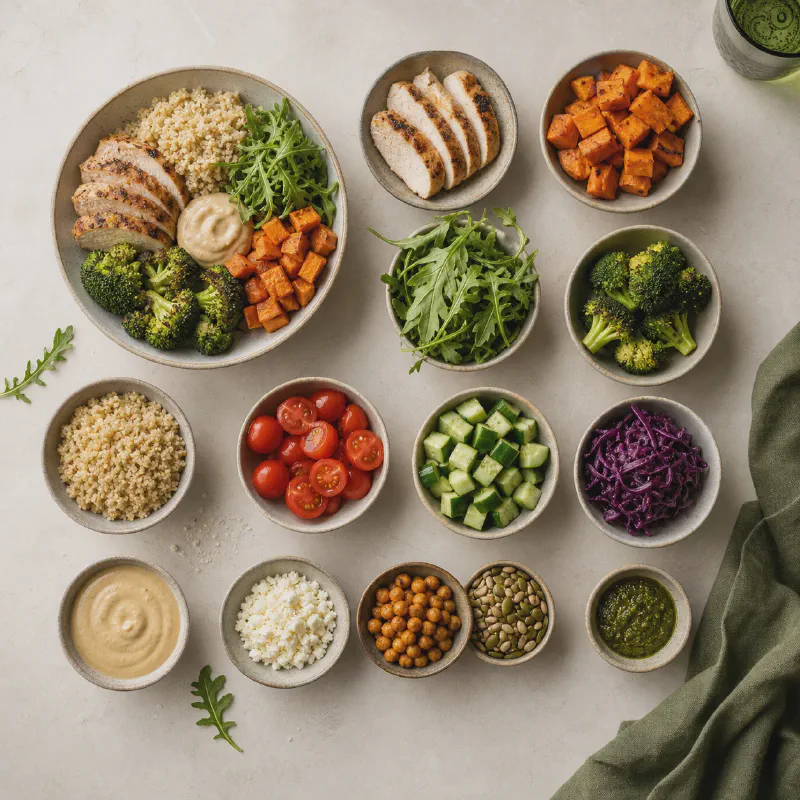
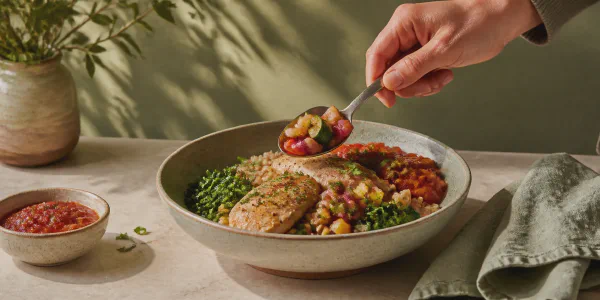
A meal template is a card where you choose the ingredients, cooking method and portion. Save your version with the ♥ button and it waits on the food tab: open it, tap “Eat”, done. Pesto instead of tomato sauce on today's pizza? Change only the sauce; the crust, cheese, toppings and portion stay in place while the whole meal recalculates.
Where do the numbers come from? Calk combines official food tables, specialist publications, product labels and recipe checks into one checked food catalog. See how Calk builds and checks its food data.
What the approach is based on
Three changes to familiar meals
1Fewer calories per gram
A larger portion can contain the same number of calories Rolls 2006.
2More protein
May improve fullness and help preserve muscle during weight loss Leidy 2015.
3More fiber
Vegetables, beans and whole grains add fiber to familiar meals Reynolds 2019.
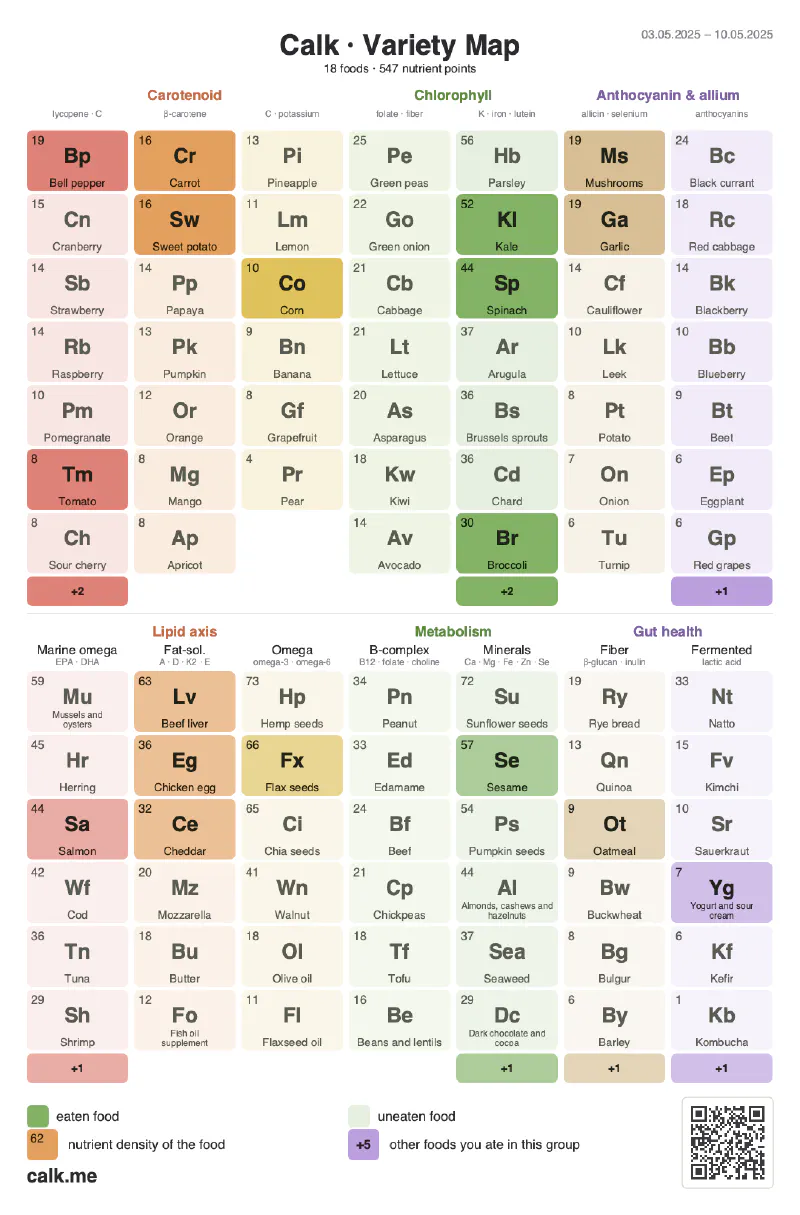
Food logging, calorie and macro targets, weight and trend chart, a weekly Variety Map.
Advice and analytics — first month free
Daily advice on your food and monthly reports, like a dietitian's.
Private, offline and ad-free
Food and weight logging run on your device without an internet connection. Calk has no ads and never will.
Calk is available on iPhone, iPad, and Android.
Frequently asked questions
What is Calk?
Calk is a calorie counter built around editable meal templates. You log a familiar meal in two taps, change only what was different today, and a month of that becomes a Nutrition Report: it names your repeating meals and what to add or replace in them. Daily food logging ends once all the changes you chose have become habits. Keep an eye on your weight; if it stops moving toward your goal, return to the food diary for a short time.
How is this different from a diet?
Calk has no forbidden foods, no menu and no meal plan. What changes is the composition of familiar meals: fewer calories per gram, more protein and fiber. A restriction stops working the moment it ends, while a familiar dish you have changed keeps repeating on its own. More in why diets don’t work.
Can you count calories without a kitchen scale?
Yes. A meal template lets you choose the ingredients, cooking method, additions and a useful portion estimate. You can weigh an unfamiliar dish once if you want a reference, but Calk does not require a scale at every meal.
Do you have to log every day?
Log ordinary food for at least a month and keep going until the changes you chose from the report are part of your routine. Then daily logging ends. Follow your weight trend and return for a short food check when needed.
What can I use for free?
Food logging, daily calorie and macro targets, weight entry and the weight-trend chart are free, and so is a shareable seven-day Variety Map. The first month of daily advice and monthly reports is free; after that they come with the annual subscription.
How is Calk different from photo-AI apps?
A photo recognizes the food on the plate, but it cannot tell how much oil, sauce, sugar or salt went into it, or which recipe it came from. Calk starts from an editable meal template, so those choices are yours and the same dish is logged the same way every time.
Does Calk replace a dietitian?
No. The Calk Nutrition Report is a detailed read of your food diary, not medical advice or a substitute for professional care.
How is Calk different from MyFitnessPal or Cal AI?
Most calorie trackers offer several ways to create a diary entry: database search, barcode, photo or voice. Calk uses one reusable meal template that you can adjust and eat again. See the full calorie-tracker comparison.





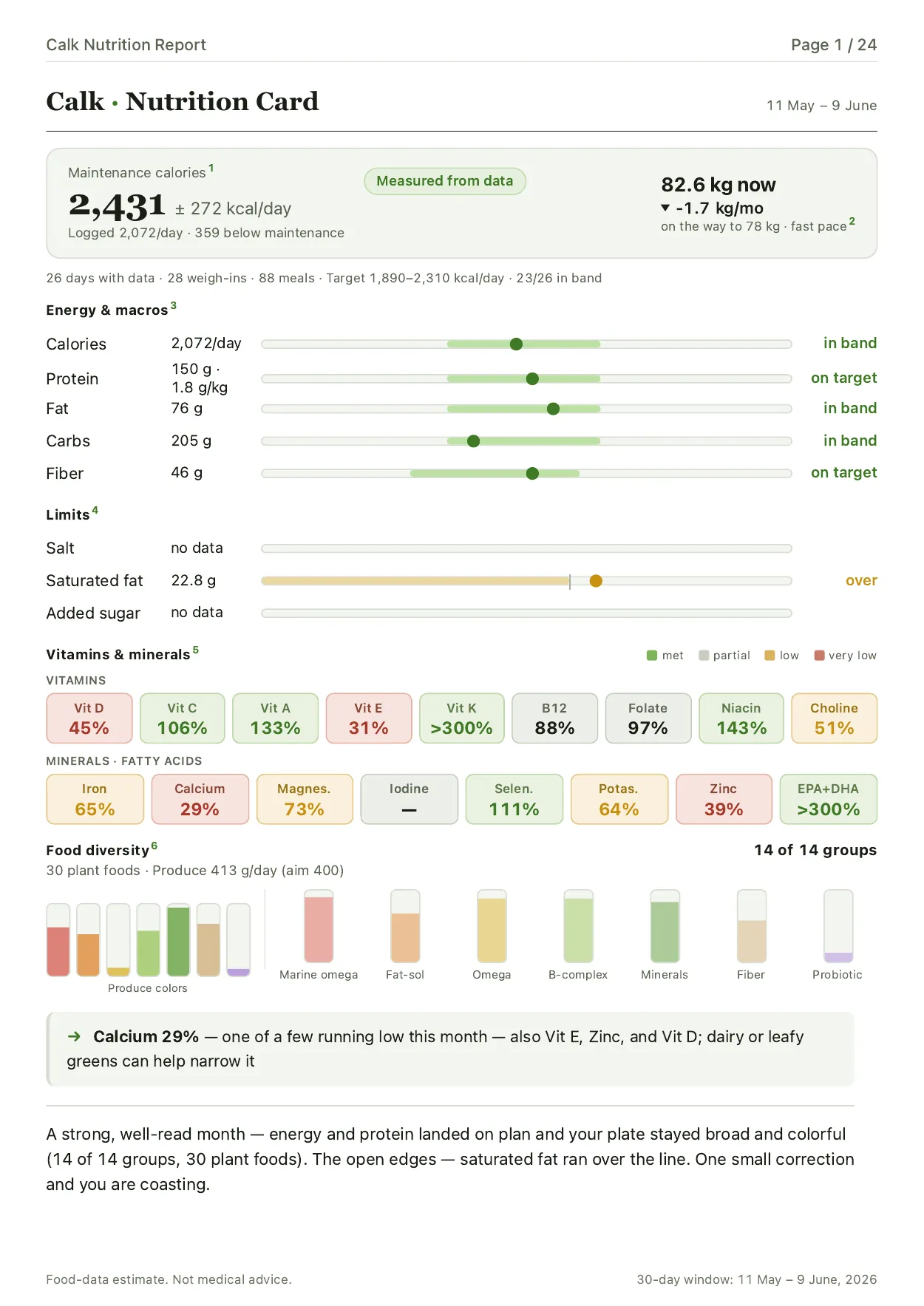 Enlarge
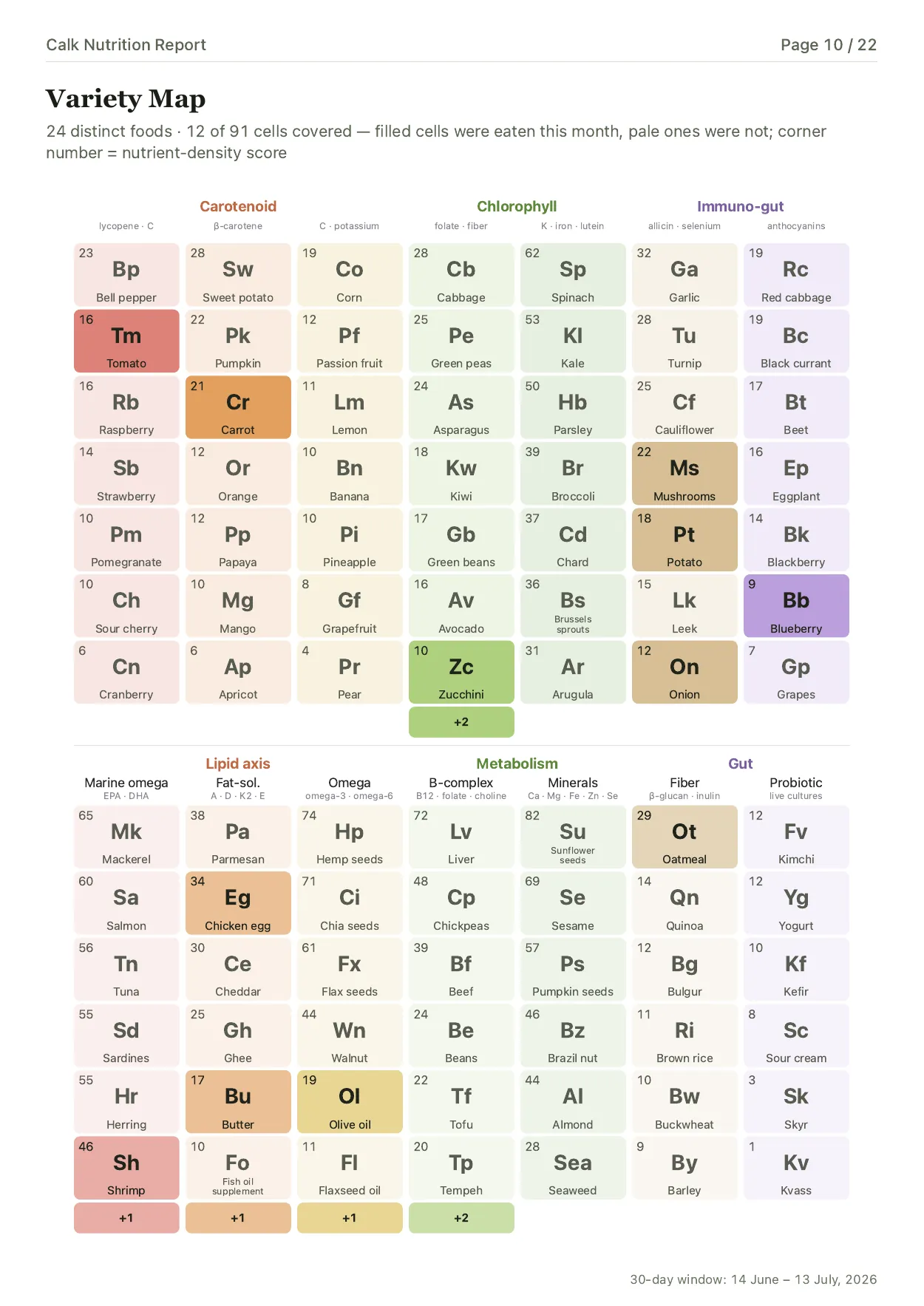 Enlarge
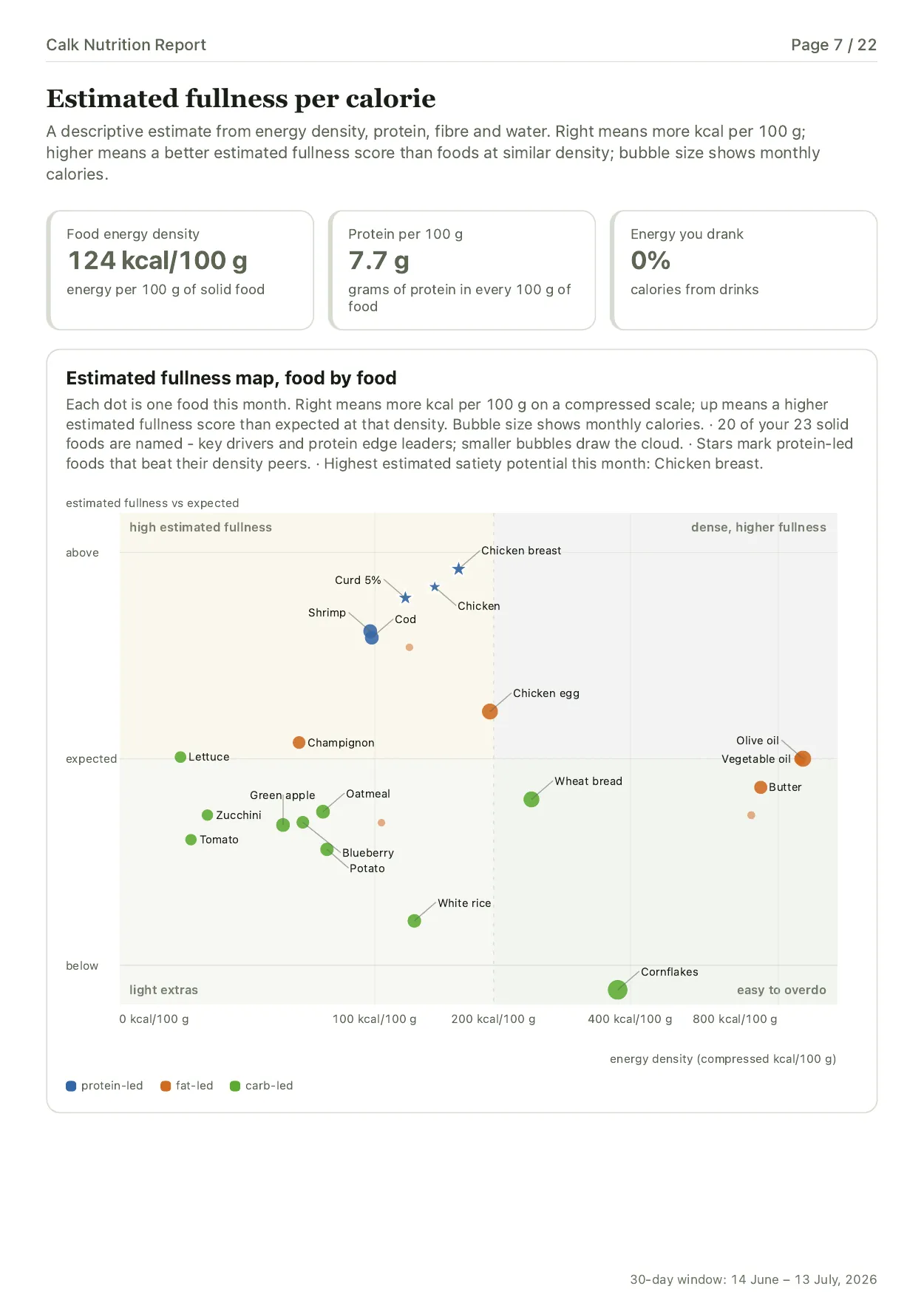 Enlarge
 Enlarge